
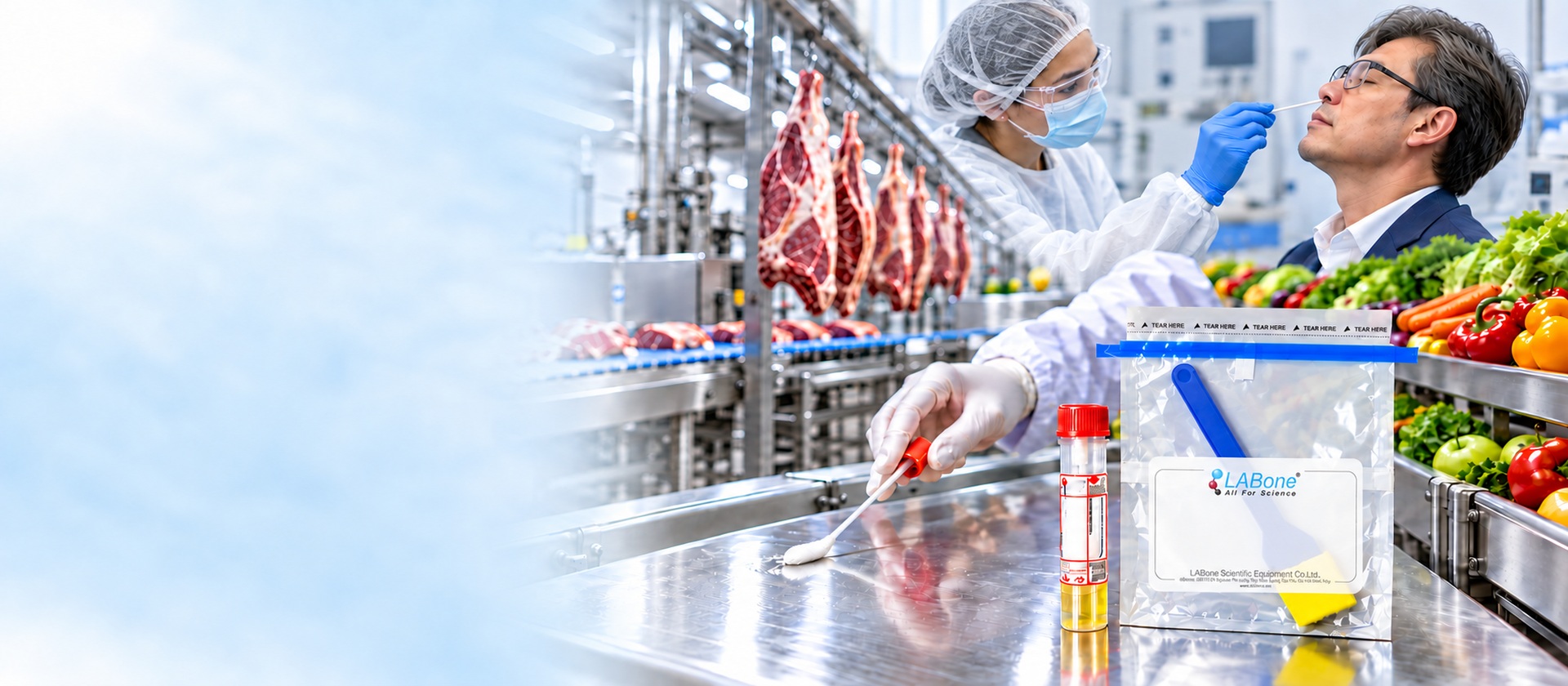
Applications in Pig, Cattle, and Poultry Slaughterhouses, Carcass Hygiene Monitoring, and Food Safety Control
1. Introduction
Microbial contamination of carcass surfaces during slaughtering and meat processing is a major concern affecting meat quality, hygiene, and food safety.
Processing operations such as skinning, scalding, dehairing, defeathering, evisceration, carcass washing, and chilling can contribute to the transfer of microorganisms from animal hides, feathers, intestinal contents, processing equipment, and the slaughterhouse environment onto carcass surfaces.
Microorganisms of particular concern include:
Salmonella spp. – Foodborne pathogens commonly associated with poultry, pork, and beef.
Escherichia coli – Used in certain monitoring programs as an indicator of fecal contamination.
Enterobacteriaceae – A group of microorganisms commonly used as indicators of slaughter hygiene.
Aerobic Colony Count (ACC) – An indicator of overall microbial contamination.
Campylobacter spp. – Important foodborne pathogens, particularly in poultry processing.
To monitor and control these risks, ISO 17604:2015 provides standardized methods for microbiological sampling of carcass surfaces after slaughter.
Among these methods, non-destructive sampling using sterile swabs and sterile sponges enables microorganisms to be recovered without removing carcass tissue.
2. Overview of ISO 17604:2015
ISO 17604:2015, Microbiology of the food chain — Carcass sampling for microbiological analysis, describes sampling methods for the detection or enumeration of microorganisms on the surfaces of animal carcasses or carcass parts after slaughter.
The standard covers three main sampling approaches:
The selection of a sampling method depends on the analytical objective, animal species, carcass characteristics, required detection sensitivity, and applicable regulatory requirements.
ISO 17604 does not establish a single universal microbiological acceptance limit for all carcass types.
3. Microbiological Sampling Using Sterile Swabs
3.1. Principle
Swab sampling involves using a sterile swab moistened with an appropriate solution to recover microorganisms from a defined area of the carcass surface.
One technique described in ISO 17604 involves using a wet swab followed by a dry swab on the same sampling area.
The wet swab facilitates microbial recovery, while the dry swab helps collect residual moisture and microorganisms remaining on the surface.
This method is suitable for relatively small sampling areas or locations requiring individual assessment.
3.2. Required Materials
Sterile microbiological sampling swabs.
Sterile tubes containing an appropriate diluent.
Sterile sampling templates.
Disposable gloves.
Sample identification labels.
Sterile transport bags.
Suitable temperature-controlled transport containers.
The sampling solution must be compatible with the analytical method and must not inhibit the target microorganisms.
3.3. Sampling Procedure
Step 1 – Selection of Sampling Sites
Identify carcass areas with a potentially high risk of microbial contamination based on the slaughtering process and monitoring objectives.
Step 2 – Definition of Sampling Area
Place a sterile template on the selected surface.
The sampling area should be determined according to the applicable sampling method or monitoring program.
Step 3 – Wet Swab Sampling
Moisten the sterile swab with an appropriate sterile solution.
Wipe the entire sampling area using horizontal and vertical strokes.
Maintain consistent pressure and rotate the swab tip to improve microbial recovery.
Step 4 – Dry Swab Sampling
Use a second sterile, dry swab to wipe the same area and recover residual moisture and microorganisms.
Step 5 – Sample Collection and Storage
Place both swabs into the same sterile sample container with the appropriate recovery solution, according to the established procedure.
Record the sample identification, sampling location, sampled area, date, and time.
4. Microbiological Sampling Using Sterile Sponges
4.1. Principle
Sponge sampling involves using a sterile sponge moistened with a suitable sampling solution to recover microorganisms from relatively large carcass surface areas.
The sponge provides effective contact with uneven surfaces and is convenient when sampling multiple locations.
For certain Salmonella monitoring programs, abrasive sponge sampling is preferred because it enables sampling over relatively large areas and may improve the likelihood of detecting microorganisms present at low levels.
4.2. Required Materials
Sterile microbiological sampling sponges.
Sterile sampling bags.
Suitable moistening or diluent solutions.
Sterile sampling templates, when required.
Sterile gloves.
Appropriate sample transport containers.
Sampling sponges should be free from substances that inhibit the target microorganisms.
4.3. Sampling Procedure
Step 1 – Preparation
Use a sterile pre-moistened sponge or moisten a dry sterile sponge with an appropriate solution.
Step 2 – Selection of Sampling Areas
Identify carcass areas associated with a higher risk of microbial contamination.
Multiple sites on the same carcass may be sampled according to the sampling plan and analytical requirements.
Step 3 – Surface Sampling
Wipe the sponge over the selected surface using horizontal and vertical strokes.
Ensure sufficient contact with the entire sampling area while maintaining appropriate pressure.
Avoid tearing the sponge or introducing contamination.
Step 4 – Sample Recovery
Transfer the sponge into a sterile sampling bag and seal it securely.
When a monitoring program requires samples from multiple sites on the same carcass to be combined, follow the specified sample pooling procedure.
Step 5 – Transportation
Transport the samples to the laboratory under controlled conditions to prevent cross-contamination, microbial inactivation, or unintended microbial growth.
5. Applications in Pig Carcass Sampling
5.1. Microbiological Contamination Risks
During pig slaughtering, processing stages such as scalding, dehairing, polishing, evisceration, and carcass washing can influence microbial contamination levels.
Potential sampling locations include:
Ham or hind leg region.
Belly region.
Brisket region.
Neck or shoulder region.
The actual sampling locations should be selected according to ISO 17604 reference guidance and the slaughterhouse-specific risk assessment.
5.2. Target Microorganisms
5.3. Sampling Area
Under Commission Regulation (EC) No 2073/2005, including applicable amendments, specific carcass sampling requirements apply.
For pig and cattle carcasses:
ACC and Enterobacteriaceae: For non-destructive sampling, a minimum of 100 cm² should be sampled at each of four sites.
Salmonella: An abrasive sponge sampling method is used, with a total sampling area of at least 400 cm².
These are specific EU regulatory requirements and should not be interpreted as universal sampling areas mandated by ISO 17604 for every application.
6. Applications in Cattle Carcass Sampling
6.1. Contamination Risks
During cattle slaughtering, hide removal and evisceration are critical operations that may transfer microorganisms from animal hides or intestinal contents to carcass surfaces.
Potential sampling sites include:
Rump or hindquarter.
Flank or abdominal region.
Brisket.
Neck.
6.2. Selection of Sampling Method
Swab sampling is suitable for collecting samples from individual, defined carcass areas.
Sponge sampling is generally more convenient when larger areas need to be sampled, particularly for Salmonella monitoring.
For EU regulatory monitoring programs, the sampling areas and number of sampling sites must comply with the applicable requirements.
6.3. Target Microorganisms
In addition to ACC, Enterobacteriaceae, and Salmonella, certain monitoring programs may include E. coli or Shiga toxin-producing E. coli (STEC), depending on the target market and food safety objectives.
7. Applications in Poultry Carcass Sampling
7.1. Characteristics of Poultry Sampling
Poultry carcasses, including chickens, ducks, and turkeys, are relatively small and have uneven skin surfaces with several difficult-to-access areas.
Potential sampling sites include:
Neck skin.
Breast region.
Wing region.
Abdominal region.
Area surrounding the cloaca.
ISO 17604 includes surface sampling, skin sampling, and whole-carcass rinsing approaches for poultry.
7.2. Swab and Sponge Sampling
Swab sampling may be used to assess small, defined areas of poultry carcasses or to support internal hygiene monitoring and research.
Sponge sampling may be used to collect samples from larger defined surface areas when appropriate.
However, sponge sampling should not automatically be considered an acceptable substitute for all regulatory Salmonella testing procedures on poultry carcasses.
For example, under Commission Regulation (EC) No 2073/2005, neck skin sampling after chilling is specified for relevant Salmonella and Campylobacter monitoring requirements.
7.3. Target Microorganisms
7.4. Selection of Appropriate Sampling Techniques
For internal hygiene monitoring, swab or sponge sampling of defined skin areas may provide useful information about microbial contamination at specific locations.
For regulatory compliance testing, the required sample type must be used, such as neck skin samples or whole-carcass rinses, depending on the applicable method and jurisdiction.
Sampling methods should not be substituted without appropriate validation and acceptance by the relevant regulatory authority or monitoring program.
8. Comparison of Sampling Methods by Carcass Type
No single sampling technique is optimal for all carcass types and microbiological targets.
9. Sample Preparation and Laboratory Analysis
Following sample collection, microbiological samples are processed according to the appropriate analytical standards.
For quantitative analysis, the recovery solution is processed and diluted as required before enumeration.
For qualitative pathogen detection, such as Salmonella, samples undergo the appropriate pre-enrichment, selective enrichment, isolation, and confirmation procedures.
Commonly applied standards include:
For quantitative testing of a defined surface area, results may be expressed as CFU/cm².
For qualitative testing, results are reported as detected or not detected in the analyzed sample or test portion.
Results obtained using different sampling methods may not be directly comparable because microbial recovery efficiencies can vary.
10. Critical Factors Affecting Sampling Efficiency
To ensure reliable and representative results, the following factors should be controlled:
Sampling site selection and carcass representativeness.
Defined sampling surface area.
Type and suitability of sampling devices.
Moistening solutions and maintenance of microbial viability.
Sampling pressure and recovery technique.
Sampling stage within the slaughtering process.
Transportation and storage conditions.
Prevention of cross-contamination between carcasses.
Laboratory sample preparation and analytical procedures.
Sampling before and after chilling may produce different results due to changes in microbial viability and recovery efficiency.
Therefore, sampling stages should remain consistent when monitoring long-term hygiene trends within a slaughtering process.
11. LABone Solutions for Carcass Microbiological Sampling
LABone provides microbiological sampling, transportation, and testing solutions for the meat and poultry industries.
Sterile Sampling Swabs
Sterile swabs suitable for sampling defined carcass surface areas and supporting routine hygiene monitoring programs.
Sterile Sampling Sponges
Sterile sampling sponges, including handle-equipped configurations, designed to support large-area sampling of pig and cattle carcasses and food processing surfaces.
Sterile Sampling Bags and Transport Solutions
Sterile sampling bags, sample tubes, and suitable solutions supporting microbial recovery, sample transportation, and laboratory preparation.
Ready-to-Use Microbiology Media
Ready-to-use microbiological media for the detection and enumeration of Salmonella, E. coli, Enterobacteriaceae, and other hygiene indicator microorganisms.
Product selection should consider compatibility with the analytical method, quality documentation, and laboratory requirements.
LABone – Advancing Microbiology Solutions.
12. Conclusion
Microbiological carcass surface sampling is an essential component of slaughter hygiene control and food safety management.
ISO 17604:2015 provides a technical framework for selecting appropriate sampling methods based on animal species, analytical objectives, and processing conditions.
Swab sampling is suitable for assessing defined surface areas, while sponge sampling provides a practical approach for microbial recovery from larger surfaces.
For poultry, skin sampling and whole-carcass rinsing techniques should also be considered, particularly when performing microbiological monitoring under regulatory requirements.
Combining appropriate sampling methods, sterile sampling devices, and controlled laboratory procedures contributes to reliable microbiological results, improved contamination risk detection, and more effective hygiene management in slaughterhouses and meat processing facilities.
LABone – Advancing Microbiology Solutions.
References
ISO 17604:2015 – Microbiology of the food chain — Carcass sampling for microbiological analysis.
ISO 6579-1:2017 – Microbiology of the food chain — Horizontal method for the detection of Salmonella spp.
ISO 4833-1:2013 – Microbiology of the food chain — Colony count at 30°C by the pour plate technique.
ISO 21528-2:2017 – Microbiology of the food chain — Enumeration of Enterobacteriaceae.
ISO 16649-2:2001 – Microbiology of food and animal feeding stuffs — Enumeration of β-glucuronidase-positive Escherichia coli.
ISO 10272-1:2017 – Microbiology of the food chain — Detection method for Campylobacter spp.
Commission Regulation (EC) No 2073/2005 – Microbiological criteria for foodstuffs, including applicable amendments.