
1. Introduction
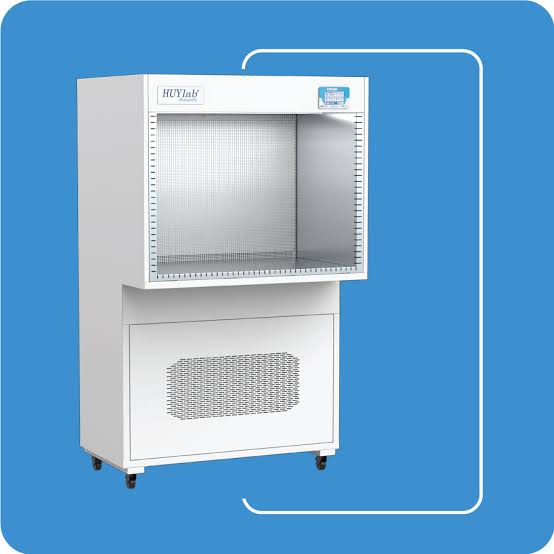
A horizontal-flow clean bench is a localized clean-air device designed to protect samples, materials, and products from airborne particulate contamination during laboratory and manufacturing operations.
Its fundamental operating principle involves a fan system and high-efficiency particulate air (HEPA) or ultra-low penetration air (ULPA) filters that supply clean air horizontally from the rear of the cabinet toward the front of the work zone [1].
In practice, product protection depends not only on filtration efficiency but also on the stability of airflow within the work zone. Operator movements, equipment obstructions, and surrounding room airflow may alter the local velocity field, producing recirculation zones or reverse airflow.
To mitigate these effects, some horizontal-flow clean benches incorporate an air-return and recirculation system. Return-air slots positioned at selected locations help control airflow near the boundaries of the work zone, reducing the risk of contaminated ambient air entering the protected area [1].