
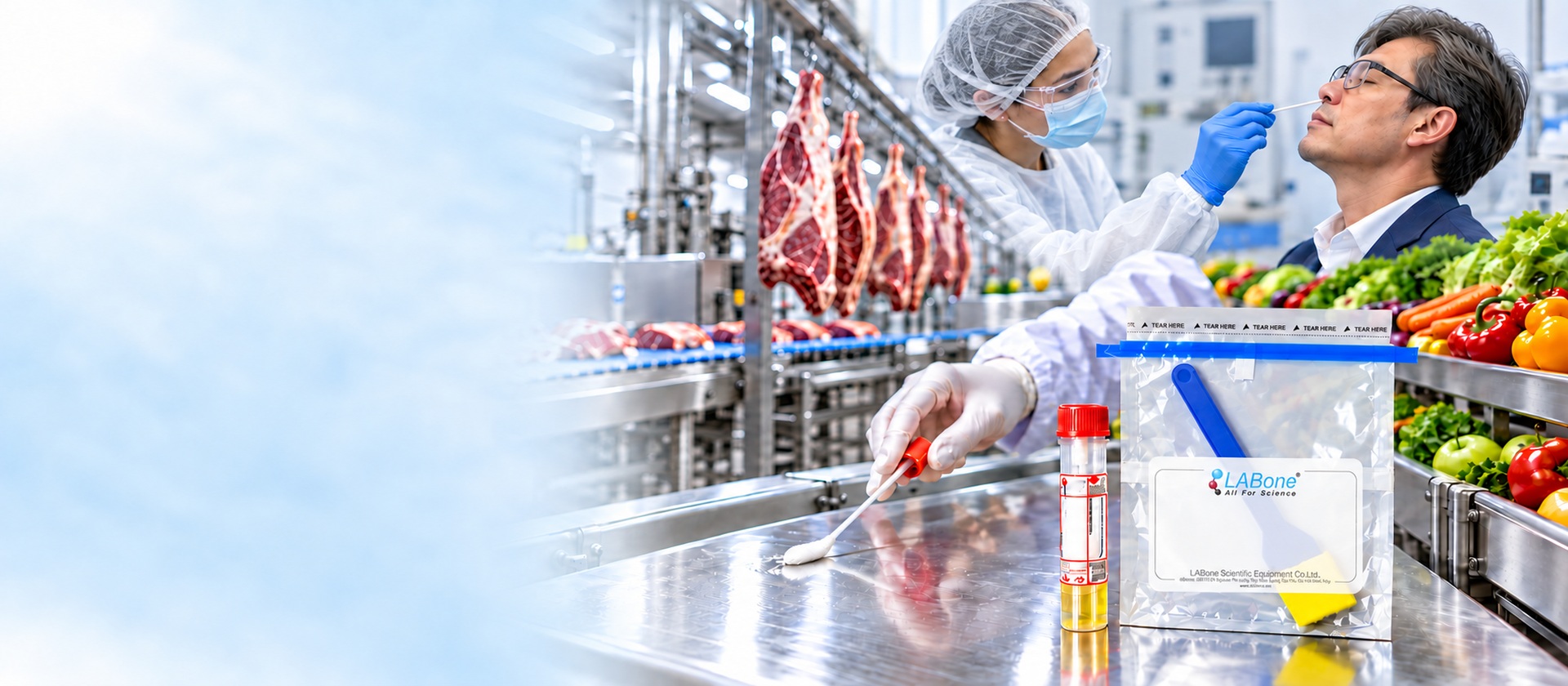
Applications in Pig, Cattle, and Poultry Slaughterhouses, Carcass Hygiene Monitoring, and Food Safety Control
1. Introduction
Microbial contamination of carcass surfaces during slaughtering and meat processing is a major concern affecting meat quality, hygiene, and food safety.
Processing operations such as skinning, scalding, dehairing, defeathering, evisceration, carcass washing, and chilling can contribute to the transfer of microorganisms from animal hides, feathers, intestinal contents, processing equipment, and the slaughterhouse environment onto carcass surfaces.
Microorganisms of particular concern include:
Salmonella spp. – Foodborne pathogens commonly associated with poultry, pork, and beef.
Escherichia coli – Used in certain monitoring programs as an indicator of fecal contamination.
Enterobacteriaceae – A group of microorganisms commonly used as indicators of slaughter hygiene.
Aerobic Colony Count (ACC) – An indicator of overall microbial contamination.